Time capture that
never loses a shift
Caregivers clock in and out in seconds — with a signal or without one. Coordinators see exactly what needs attention. Nobody goes unpaid because an app refused a GPS reading.
One method never fits everybody
A rural home with no cell coverage. A participant with no landline. A worker whose phone died. Each needs a different answer, and a product that offers only one excludes people.
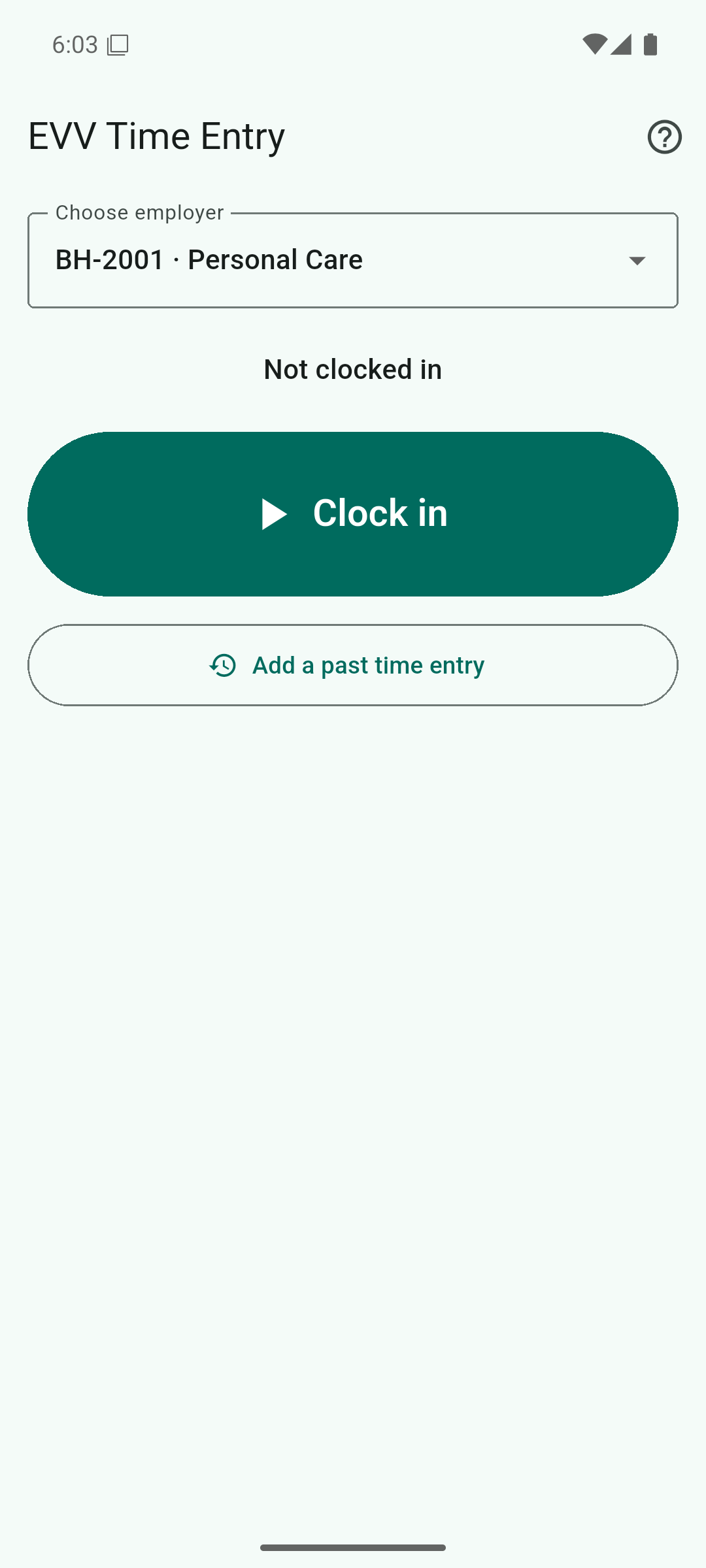
Mobile app
GPS-verified clock in and out in seconds, in English or Spanish.
Offline capture
No signal? The punch is recorded on the spot and sent when you reconnect — still GPS-verified, still counts.
Telephony (IVR)
Call in and out from the client’s landline. Caller ID verifies the location.
Fixed device (FOB)
A sealed unit in the home shows an 8-digit code. Read it, enter it later, from anywhere.
Scheduling
Optional by design. Required for agencies, never forced on self-direction.
Multiple languages
English and Spanish today, with text and icons on every control.
A punch is never refused
Read the app-store reviews of the incumbent EVV products and the same complaint appears over and over: the app would not let someone record their time, so they worked unpaid.
So if location is unavailable — permission denied, no fix in time, services switched off — the time is still recorded, the entry is flagged for review, and the caregiver is asked why while they still remember. The visit reaches a coordinator with an explanation attached instead of arriving as a mystery a week later.
Every fallback is a percentage point
States score providers on the share of visits captured electronically. A visit re-typed from memory does not count. A visit captured offline, phoned in, or read from a fixed device does.
Texas minimum compliance
Pennsylvania minimum
New York minimum
Punches refused for a bad GPS reading
Most EVV systems were not built for this
In self-direction the participant decides who works, when, and where. Software that assumes an agency gets worked around — and the workarounds become the compliance problem.
No required schedules
The Cures Act does not require them. Participants arrange hours directly.
No geofencing
People go into the community. A boundary around a home turns ordinary life into exceptions.
The participant approves
They are the employer. The approval belongs to them.
Live-in exemptions
83% of surveyed FMS entities wanted live-in caregivers exempt. None wanted it required.
One login, several employers
Workers switch between participants without a second account.
Corrections need agreement
Adjust someone’s hours and they are asked to confirm.